Dicomizer
The DICOM standard allows encapsulation of a PDF file. There are two methods to upload a PDF and convert it into a DICOM file, or "dicomize" it: through the UPLOAD PDF option in the study editor, or via the REST API endpoint.
Endpoint
First, generate a role with valid permissions to use the API. Go to permissions, select the roles tab and click + ROLE.
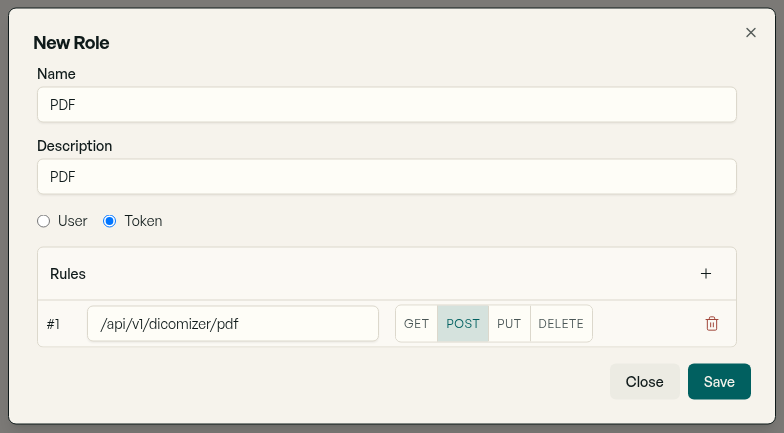
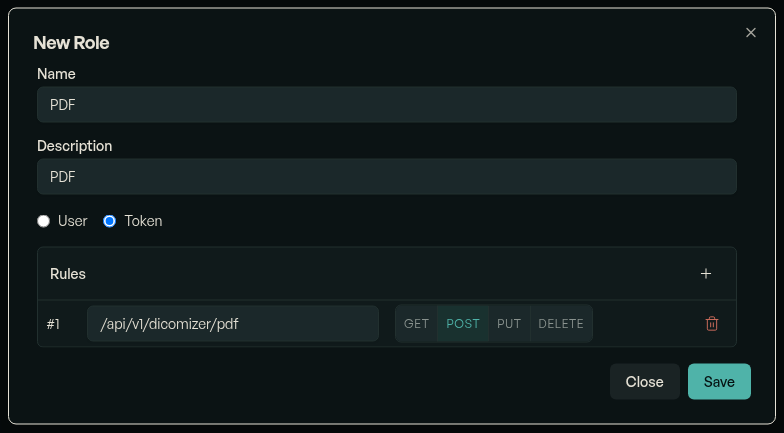
Next, create a token and assign the created role. Clicking the Token column copies the token hash to the clipboard.
Example
POST http://localhost:8080/api/v1/dicomizer/pdf
{
    "metadata": {
        "patientName": "PATIENT^NAME",
        "patientId": "2020202",
        "modality": "US",
        "accessionNumber": "TEST",
        "studyId": "A2020"
    },
    "pdfFile": "data:application/pdf;base64,JVBERi0xLjcKCjQgMCBvYmoKPDwKL0Jpd.."
}
Authorization: Bearer token hash
Metadata
The following metadata fields can be added to the DICOM file.
Required:
patientName(0010,0010): Patient name. Example: "Doe^John".patientId(0010,0020): Unique patient identifier. Example: "123456".modality(0008,0060): Modality of the equipment used to acquire the data. Example: "CT" for computed tomography, "MR" for magnetic resonance.
Optional:
issuerOfPatientId(0010,0021): Organization responsible for assigning the patient identifier. Example: "Hospital XYZ".patientBirthDate(0010,0030): Patient birth date. Example: "19800525".patientBirthTime(0010,0032): Patient birth time. Example: "081500".patientSex(0010,0040): Patient biological sex. Example: "M" for male, "F" for female.patientComments(0010,4000): Comments about the patient. Example: "Allergy history".otherPatientNames(0010,1001): Other names used to identify the patient. Example: "John Doe".studyDate(0008,0020): Study start date. Example: "20240507".studyTime(0008,0030): Study start time. Example: "153000".accessionNumber(0008,0050): Number identifying the study. Example: "123456789".referringPhysicianName(0008,0090): Referring physician name. Example: "Dr. John Smith".studyDescription(0008,1030): Description of the procedure performed. Example: "Skull tomography".studyInstanceUid(0020,000D): Unique identifier for the study. Example: "1.2.840.10008.5.1.4.1.1.2".studyId(0020,0010): Study identifier. Example: "STUDY001".patientAge(0010,1010): Patient age at the time of the study. Example: "042Y".patientSize(0010,1020): Patient size (e.g., height) in meters. Example: "1.75".patientWeight(0010,1030): Patient weight in kilograms. Example: "70".pregnancyStatus(0010,21C0): Indicates if the patient is pregnant. Example: "N" for not pregnant, "Y" for pregnant.smokingStatus(0010,21A0): Indicates patient smoking status.additionalPatientHistory(0010,21B0): Additional patient history. Example: "Family history of heart disease".lastMenstrualDate(0010,21D0): Patient's last menstrual date. Example: "20240415".reasonForVisit(0032,1030): Reason for the patient's visit. Example: "Persistent headache".admissionId(0038,0010): Patient admission identifier. Example: "ADM123".patientState(0038,0500): Current patient state. Example: "Stable".seriesDate(0008,0021): Series start date. Example: "20240507".seriesTime(0008,0031): Series start time. Example: "154500".seriesDescription(0008,103E): Series description. Example: "T1-weighted sequences".seriesInstanceUid(0020,000E): Unique identifier for the series. Example: "1.2.840.10008.5.1.4.1.1.2.1".seriesNumber(0020,0011): Number identifying the series within the study. Example: 1.manufacturer(0008,0070): Equipment manufacturer. Example: "Siemens".institutionName(0008,0080): Institution name. Example: "General Hospital".institutionAddress(0008,0081): Institution address. Example: "Main Street 123".stationName(0008,1010): Device name. Example: "MRI Scanner 1".institutionalDepartmentName(0008,1040): Department within the institution. Example: "Radiology".manufacturerModelName(0008,1090): Device model name. Example: "MAGNETOM Skyra".deviceSerialNumber(0018,1000): Device serial number. Example: "12345".deviceUid(0020,3406): Unique device identifier. Example: "1.2.826.0.1.3680043.9.3813.1.0.123456789".softwareVersions(0018,1020): Software versions. Example: "V1.2.3".conversionType(0008,0064): Data conversion type. Example: "Lossless JPEG".contentDate(0008,0023): Content creation date. Example: "20240507".acquisitionDateTime(0008,002A): Date and time the data was acquired. Example: "20240507160000".contentTime(0008,0033): Content creation time. Example: "163000".instanceNumber(0020,0013): Instance number. Example: 1.burnedInAnnotation(0028,0301): Indicates whether the annotation is burned into the image. Example: "NO" for not burned, "YES" for burned.documentTitle(0042,0010): Document title. Example: "Radiology Report".sopInstanceUid(0008,0018): Unique SOP instance identifier. Example: "1.2.840.10008.5.1.4.1.1.2.1".